
Dry Needling in Durham, NC
Dry needling therapy in Durham, NC — thin sterile needles release tight muscle trigger points to ease chronic pain, muscle tension, and sports injuries.
Complete Chiropractic Sports & Wellness
Understanding dry needling
Dry needling therapy is a proven, evidence-backed technique for chronic pain, muscle tension, and sports injuries. Tight, knotted muscles that won't release with stretching or massage alone respond remarkably well. At Complete Chiropractic Sports & Wellness in Durham, Dr. Kevin McLaughlin uses thin needles to reach deep trigger points, prompt a quick release, and restore comfortable, pain-free movement — all without medication. Patients across Durham, Cary, Chapel Hill, and the Triangle use it for neck pain, shoulder tension, sports recovery, and stubborn soft-tissue injuries that haven't fully resolved with other care.
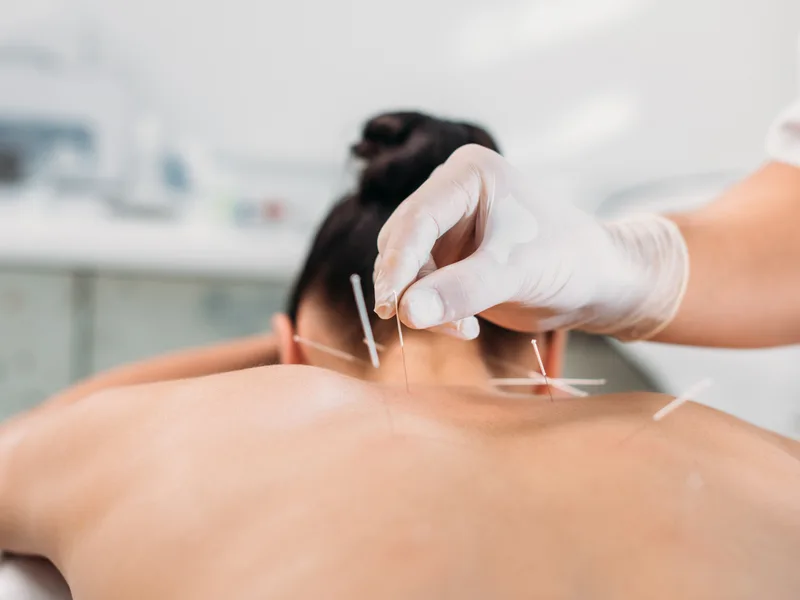
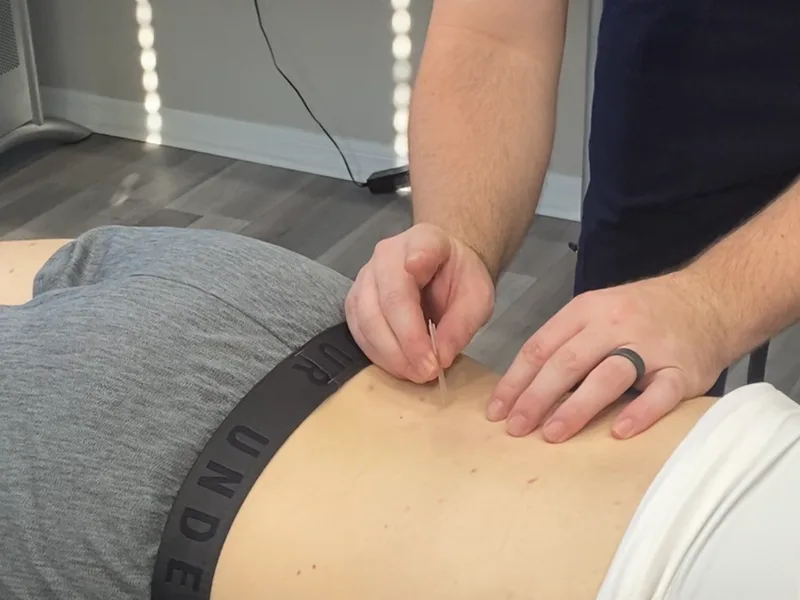
How it works
What to expect with dry needling
- Step 1
Intake and screening
Before any needling we review your health history, medications, and any contraindications. We explain the procedure, answer your questions, and confirm you're a good candidate — no surprises.
- Step 2
Precise needle placement
Using anatomical landmarks and palpation, we place a thin, sterile needle into the target trigger point. You may feel a brief, deep ache or a quick muscle twitch — both are expected and mean we've found the right spot.
- Step 3
Release, rehab, and follow-up
After the needle is removed the muscle is noticeably softer. We pair needling with corrective movement or manual therapy so the results hold between visits and the pattern that created the trigger point is addressed.
Why patients choose it
Benefits of dry needling
Relief from chronic pain by targeting trigger points and muscular knots
Improved muscle function and flexibility through released tension and better blood flow
Enhanced sports performance and faster recovery from athletic injuries
Reduced muscle tension and a greater sense of relaxation
Faster rehabilitation by accelerating the body's natural healing process
Customized treatment tailored to each patient's specific needs and goals
Restores range of motion without drugs or surgery
Minimal downtime — most patients return to normal activity the same day
The basics
About dry needling
A trigger point is a tight, irritable spot inside a muscle — the knot you feel when you press into a sore upper trap or a stiff calf. Trigger points limit range of motion, refer pain to nearby areas, and can keep a muscle in a low-grade spasm for months after an injury or period of overuse. Stretching and foam rolling can help at the surface, but they rarely reach the deep fibers where true trigger points live.
Dry needling places a hair-thin, sterile needle directly into that tight band. The needle often provokes a brief involuntary "twitch" — a local muscle twitch response — that resets the tension in the fiber, improves blood flow, and reduces the chemical irritants keeping the trigger point active. It is an evidence-informed technique performed only after a thorough intake and screening, and it is distinct from acupuncture, which is rooted in Traditional Chinese Medicine meridian theory. Dry needling works from a Western musculoskeletal anatomy framework to target the specific muscles driving your pain.
New Patient Special
$127
- Chiropractic Consultation
- Comprehensive Exam
- First Adjustment
- Shockwave Therapy
This is a $330+ value.
About dry needling therapy
Dry needling therapy is gaining recognition as an effective treatment for a wide range of musculoskeletal conditions, including chronic pain, muscle tension, and sports injuries. By targeting trigger points and muscular knots with thin needles, dry needling offers numerous benefits for individuals seeking relief from discomfort and improved mobility. It is a targeted soft-tissue technique that uses a hair-thin, solid, sterile needle to release trigger points — the tight, irritable knots inside a muscle that cause local pain and refer discomfort to other areas. Unlike an injection, the needle carries no medication; the therapeutic effect comes entirely from the mechanical stimulus at the trigger point itself. A brief involuntary muscle twitch often follows needle placement, which is a reliable sign the right tissue has been engaged and the release is underway.
Despite using the same style of needle, dry needling is not acupuncture. Acupuncture is a practice rooted in Traditional Chinese Medicine and works along meridian pathways. Dry needling is grounded in Western musculoskeletal anatomy — it targets specific muscles identified through examination, movement testing, and palpation. At our Durham office it is performed by a trained provider who completes a screening before every session, so it is safe, well-tolerated, and appropriately matched to your individual presentation.
Benefits of dry needling therapy
- Relief from chronic pain — dry needling targets trigger points and muscular knots, helping to alleviate chronic back pain and persistent discomfort.
- Improved muscle function — by releasing tension and promoting blood flow to affected muscles, dry needling can enhance muscle function and flexibility.
- Enhanced sports performance — athletes often use dry needling to address sports-related overuse injuries and improve recovery time, allowing them to perform at their best.
- Reduced muscle tension — dry needling helps relax tight muscles and reduce muscle tension, promoting a sense of relaxation and well-being.
- Faster rehabilitation — dry needling can accelerate the body’s natural healing process, leading to faster rehabilitation and recovery from injuries.
- Customized treatment — therapy is tailored to each individual’s specific needs and goals, ensuring personalized care and optimal results.
What to expect
Your first dry needling visit begins with a conversation. We review your health history, current medications, and any factors that might affect whether needling is appropriate for you. Once we confirm you’re a good candidate, we identify the target muscles through palpation — feeling for the taut bands and tender spots that signal active trigger points.
The needle itself is extremely thin — far finer than an injection needle — so the initial insertion typically feels like little or nothing. When the needle tip reaches the trigger point, you may notice a deep ache, pressure, or a quick local twitch. That twitch is normal and usually means the muscle has released. Each needle stays in place for a short time; a single session often addresses several muscles. The treatment itself takes 15–30 minutes depending on how many sites we’re treating.
Afterward, mild soreness lasting 24–48 hours is common — similar to the feeling after a tough workout or a deep massage. Most patients return to their normal routine the same day. We often follow up with gentle movement, stretching, or a manual therapy technique to reinforce the release while the muscle is in a more receptive state.
Who it helps
Dry needling works well for anyone whose pain has a meaningful muscle-tension or trigger-point component. It’s especially useful when:
- Neck pain or shoulder tension keeps returning despite adjustments — upper-trap and levator scapulae trigger points are a frequent culprit.
- Shoulder pain from rotator cuff strain or impingement is slowed by guarding muscles that won’t fully let go.
- Sprains and strains have left behind a tight, hypersensitive band that limits your return to full activity.
- Overuse injuries in athletes or active workers — repetitive loading creates chronic trigger points that stretch and foam rolling don’t fully resolve.
If you’re not sure whether your pain fits this profile, your exam will tell us. We’ll be straightforward if a different approach is a better fit.
Why choose Complete Chiropractic Sports & Wellness in Durham
Our expert team is committed to delivering personalized care tailored to your specific needs. We specialize in dry needling therapy, helping patients find relief from muscle tension, reduce pain, and improve mobility through this effective technique. Our focus on advanced methods and patient-centered care makes us a trusted provider of dry needling in Durham, North Carolina.
At our Durham office, dry needling is never used in isolation — it’s one tool in a connected care plan that may include chiropractic adjustments, physiotherapy, trigger-point therapy, and sports-focused athlete care to address both the muscle and the underlying mechanics driving the tension. Dr. Kevin McLaughlin explains what he’s doing and why at every step, so you always understand your care.
We’ve served Durham and the Triangle — including Cary, Chapel Hill, Morrisville, Apex, Raleigh, and Research Triangle Park — since 2012. Ready to experience the benefits of dry needling? Check out our New Patient Special or contact us to book your consultation and discover how this innovative therapy can help relieve pain, improve function, and support your overall wellness.
What it helps
Conditions we treat with dry needling
What is dry needling?+
Dry needling is a technique where a trained provider inserts a thin, sterile needle into a muscle trigger point — a tight, painful band of tissue — to produce a brief twitch response that relaxes the muscle and eases pain. It uses no medication or injection, which is why it's called "dry."
How is dry needling different from acupuncture?+
The needles look similar, but the systems are different. Acupuncture is rooted in Traditional Chinese Medicine and works along energy meridians. Dry needling comes from Western musculoskeletal medicine and targets specific muscle trigger points identified through anatomy and movement assessment. Dr. McLaughlin uses it as a precise soft-tissue tool within your chiropractic care plan.
Does dry needling hurt?+
Most patients feel little or nothing when the needle enters. Inside the trigger point you may notice a brief deep ache, pressure, or a quick involuntary muscle twitch — that twitch is actually a good sign. The sensation passes in seconds. A mild soreness (similar to a post-workout ache) can linger for 24–48 hours.
Is dry needling safe?+
Yes, when performed by a trained provider after proper screening. We use single-use, sterile needles and review your medical history to check for contraindications (blood thinners, pregnancy, certain implants) before every session. Side effects are generally limited to temporary local soreness or minor bruising.
How many sessions will I need?+
It varies by condition and how long you've had it. Many patients notice meaningful improvement after one to three sessions. We typically recommend dry needling as part of a broader care plan, and Dr. McLaughlin will give you a realistic timeline after your initial exam.
What conditions does dry needling treat?+
We use it most often for neck pain and shoulder tension, sprains and strains that are slow to resolve, and overuse injuries in athletes and active adults. It also complements care for headaches driven by upper-trap trigger points, rotator cuff pain, and persistent low-back muscle guarding.
How long should I rest after a dry needling session?+
Light activity is better than full rest. Keep moving gently with easy walking or stretching, stay hydrated, and avoid intense exercise for the rest of the day. Mild soreness for 24–48 hours is normal; a warm pack can help, and most patients are back to their usual routine the same day.
Will my insurance cover dry needling?+
Coverage varies. Some plans include soft-tissue therapy; others do not specifically list dry needling. We'll verify your benefits before your first visit and walk you through any out-of-pocket costs. We also offer straightforward self-pay rates.
Can dry needling be combined with chiropractic care?+
Yes — it's often more effective that way. Releasing a muscle trigger point with dry needling can make a joint adjustment easier to perform and easier to hold, and corrective exercises after needling can keep the muscle from tightening back up. Most patients receive it as one piece of a coordinated care plan.
Explore more
Related services
Patient reviews
What our Durham patients say
“Complete Satisfaction and Professionalism. Top top Notch!”
“I saw Dr. David Nichols today and was extremely pleased with the adjustment and care. Dr. Nichols took time to explain the different ways he used therapy. This was an excellent adjustment and I highly recommend him and the entire practice. His schedule allows for…”
“So I'll be the first to say, as someone who practices acupuncture and is very holistic minded, I 100% was skeptical when I saw the words chiropractic and dry needling but I went there for the Shockwave and have not been disappointed. Not only am…”