
Spinal Decompression Therapy in Durham, NC
Non-surgical motorized spinal traction in Durham, NC gently stretches the spine to relieve herniated discs, sciatica, and chronic neck and back pain — drug-free.
Complete Chiropractic Sports & Wellness
Understanding spinal decompression therapy
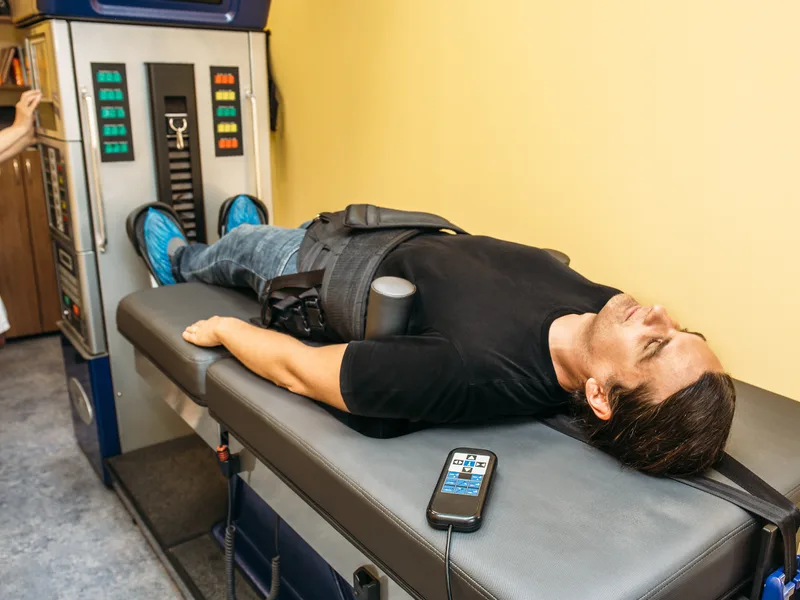
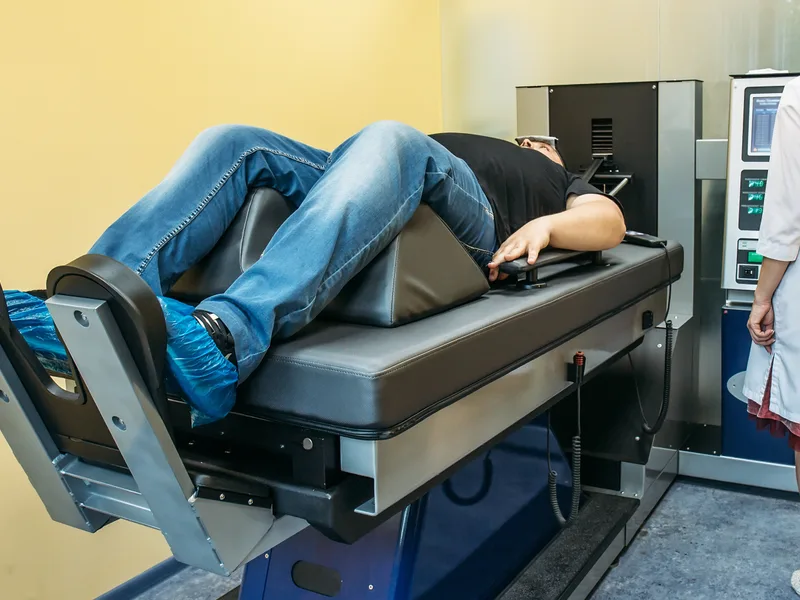
If a herniated disc, sciatica, or chronic back pain has you looking for a non-surgical answer, spinal decompression therapy at Complete Chiropractic Sports & Wellness in Durham may be exactly what you need. Dr. Kevin McLaughlin and our team use a state-of-the-art motorized traction table to gently stretch your spine in precise, computer-controlled cycles — relieving pressure on compressed discs and the nerves around them without drugs, injections, or surgery. It's one of the most comfortable, effective conservative options available for disc-related back and neck pain anywhere in the Triangle, from Durham and Cary to Chapel Hill, Apex, Morrisville, and Research Triangle Park.
How it works
What to expect with spinal decompression therapy
- Step 1
Thorough candidacy exam
Before your first session, Dr. McLaughlin reviews your history and performs orthopedic and neurological testing to confirm you're a good candidate and rule out contraindications — so decompression is both safe and targeted for your specific disc issue.
- Step 2
A personalized decompression plan
You receive a clear, time-bound schedule of sessions with specific tension levels and angles dialed in for your spine — not a generic protocol. We explain exactly what to expect and when you should feel improvement.
- Step 3
Decompression + adjustments + rehab
Each visit combines the traction session with gentle chiropractic adjustments to restore joint motion and targeted core exercises that protect the disc and keep pain from returning.
Why patients choose it
Benefits of spinal decompression therapy
Non-surgical — no incisions, anesthesia, or recovery time
FDA-cleared, non-invasive therapy with minimal risk
Drug-free relief from disc, nerve, and radiating pain
Comfortable — most patients describe sessions as relaxing
Addresses the root cause by restoring disc height and hydration
Pairs with adjustments and rehab for lasting results
Restores spinal alignment to improve posture and mobility
Safe option after conservative care fails and before surgery is considered
The basics
About spinal decompression therapy
Spinal decompression therapy is a traction-based treatment designed to alleviate pressure on the spinal discs and nerves. Your spinal discs act as cushions between the vertebrae, absorbing shock and allowing movement. When a disc bulges, herniates, or loses height from aging, repetitive strain, poor posture, or injury, it can press on nearby nerves and produce pain, numbness, or weakness that radiates down the leg or arm. Traditional pain relief — rest, anti-inflammatories, injections — can quiet symptoms for a while, but it doesn't restore the disc or take the pressure off the nerve. Spinal decompression does both at once.
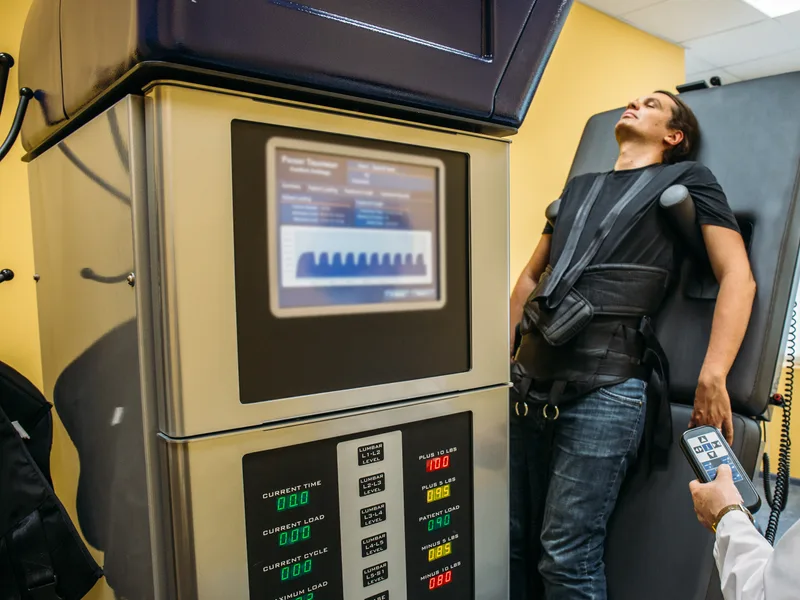
During a decompression session, the motorized table creates a controlled negative pressure inside the disc — essentially a gentle vacuum effect — that coaxes bulging material back toward center and draws oxygen, nutrients, and water back in to help the disc rehydrate and heal. This is a process clinicians call imbibition. At the same time, tight muscles and restricted spinal joints get a chance to release, and pressure on compressed nerve roots eases so normal nerve signaling can return. Most patients find the 15–30 minute sessions deeply relaxing, and many feel noticeable relief within the first few visits. We pair decompression with chiropractic adjustments and targeted rehab so the results hold long after your plan ends.
New Patient Special
$127
- Chiropractic Consultation
- Comprehensive Exam
- First Adjustment
- Shockwave Therapy
This is a $330+ value.
What is spinal decompression?
Non-surgical spinal decompression is a motorized, traction-based therapy that gently stretches the spine in precise, computer-controlled cycles. As the table creates a carefully calibrated pull and release, negative pressure builds inside the affected disc — drawing bulging or herniated material back toward center and pulling in the oxygen, nutrients, and fluid the disc needs to heal. The result is less pressure on the disc itself and on the nerves running through the surrounding foramen.
Unlike older manual traction, modern computerized decompression targets a specific spinal level and angle, adapts tension in real time, and keeps the surrounding muscles from bracing against the pull — making it more comfortable and more effective than its predecessors. It’s an FDA-cleared, non-invasive therapy with minimal risk and no downtime. Sessions last roughly 15–30 minutes, and most patients describe them as deeply relaxing.
How does spinal decompression work?
A specialized decompression table carefully and gently stretches the spine through controlled cycles. That controlled stretching helps:
- Relieve pressure on spinal discs — reducing the pressure inside the discs so bulging or herniated material can retract, easing nerve compression and pain.
- Improve nutrient and oxygen flow — decompressing the spine lets nutrients, oxygen, and hydration reach the damaged discs, supporting tissue repair.
- Reduce nerve compression — as the discs retract, pressure on nearby nerves is relieved, which can ease conditions such as sciatica that send pain down the leg.
- Restore spinal alignment — decompression can help realign the spine, improving posture, mobility, and overall spinal health.
This process targets the root causes of back and neck pain to provide lasting relief rather than simply masking symptoms.
Conditions treated with spinal decompression
Spinal decompression is especially well suited for patients with:
- Herniated or bulging discs in the lower back or neck, where displaced disc material presses on nearby nerves
- Sciatica — pain, numbness, or weakness running from the low back into the leg
- Pinched nerves causing arm or leg pain
- Chronic low back pain that hasn’t responded to adjustments alone
- Neck pain with radiating arm symptoms
- Degenerative disc disease, spinal stenosis, and facet syndrome causing ongoing stiffness and nerve irritation
- Leg pain or arm pain traced to a compressed spinal nerve
How decompression compares to other treatments
Spinal decompression is one of several ways to address spinal conditions, and it often works best alongside the others rather than instead of them:
- Versus chiropractic adjustments — Decompression gently stretches the spine to create space between the vertebrae and relieve disc pressure, while chiropractic adjustments use quick, controlled movements to restore joint motion and alignment. The two are highly complementary.
- Versus physiotherapy — Decompression passively relieves nerve compression and improves disc health; physiotherapy strengthens the muscles that support the spine so the gains hold.
- Versus surgery — Decompression is non-invasive and uses traction to reduce disc pressure, whereas surgery removes or fuses parts of the spine and carries longer recovery. Decompression is well suited to mild-to-moderate conditions; severe cases that don’t respond to conservative care may still need surgery.
- Versus pain medication — Decompression treats the underlying cause by restoring disc function, while medications mask symptoms temporarily without addressing the source.
What to expect
Your first visit begins with a candidacy exam. Dr. McLaughlin reviews your history, performs orthopedic and neurological testing, and — if you’ve had recent imaging — reviews it to confirm which disc level is involved and whether decompression is the right fit. If you’re a good candidate, your personalized plan is mapped out: the number of sessions, the tension settings, and the angle of pull are all tailored to your spine.
During each session you’ll lie comfortably on the motorized table while it cycles through gentle stretch-and-release intervals directed precisely at the target disc. The procedure is painless — most patients relax, and many fall asleep. A typical session lasts 15 to 30 minutes, and most patients need a series of sessions over several weeks for the best results. After decompression, Dr. McLaughlin typically adds a chiropractic adjustment to restore joint motion, followed by targeted core or stabilization exercises that protect the disc.
Afterward you can return to normal activities right away — there’s no downtime. It’s not unusual to feel some stiffness or soreness, which is normal and often a sign you’re responding to treatment. We recommend staying mobile and hydrating well; these symptoms usually settle soon after your session. Many patients feel some relief within the first three to five visits, with lasting improvement building over the full course of care as the disc rehydrates and the supporting muscles grow stronger.
Who can benefit — and who shouldn’t
Spinal decompression is an excellent, non-invasive option for people with chronic back or neck pain from herniated discs, sciatica, facet syndrome, or degenerative disc disease who want to avoid surgery and medication. It works best as part of a combined plan — decompression relieves disc pressure, chiropractic adjustments restore joint mechanics, and physiotherapy builds the core stability that keeps the disc from re-loading.
Decompression isn’t right for everyone. People with advanced osteoporosis, spinal fractures, tumors affecting the spine, certain spinal implants, severe nerve damage, or pregnancy are typically not candidates. That’s exactly what the candidacy exam is for — we only proceed when it’s genuinely the right choice, and if your exam suggests surgery is the better path, we’ll tell you honestly and help coordinate that referral.
Why choose Complete Chiropractic Sports & Wellness
Patients from Durham, Cary, Chapel Hill, Apex, Morrisville, Raleigh, and Research Triangle Park choose us because we treat the source, not just the symptom. Serving the Triangle since 2012, our experienced five-doctor team — led by Dr. Kevin McLaughlin — combines computerized spinal decompression, gentle chiropractic care, and targeted physiotherapy into one clear, time-bound plan, so you get real relief now and the strength to stay pain-free.
Ready to see if decompression is right for you? Our New Patient Special makes your first visit easy. Call us at (919) 908-7170 or book an appointment online in under a minute.
What it helps
Conditions we treat with spinal decompression therapy
Good to know
Spinal Decompression Therapy FAQ
Still have questions? Contact us — we're happy to help.
What conditions can spinal decompression therapy treat?+
It's effective for herniated and bulging discs, sciatica, degenerative disc disease, spinal stenosis, facet syndrome, pinched nerves, and chronic neck or low back pain. It also helps with postural imbalances and radiating pain caused by spinal nerve compression.
Is spinal decompression therapy painful?+
No. It's designed to be gentle and comfortable — most patients feel a mild stretch-and-release and a sense of relief during treatment. Some feel slight soreness afterward, similar to after a workout, which is temporary and a normal sign of progress.
How is decompression different from traditional traction?+
Traditional traction applies one continuous pull, which can make muscles tighten and resist. Computerized decompression alternates stretch and relaxation and can be angled to a specific disc level — improving rehydration and comfort while preventing muscle guarding.
How long does a session take?+
Each session lasts about 15 to 30 minutes, depending on your condition and your personalized plan. Timing can vary when complementary therapies like chiropractic adjustments or rehab exercises are added to the visit.
How many sessions will I need?+
A typical plan is around 20 to 24 sessions over a 4 to 6-week period, depending on how long you've had the problem and how your disc responds. Many patients notice improvement after the first few visits, and Dr. McLaughlin gives you a plan with a clear endpoint.
Can spinal decompression help me avoid surgery?+
In many cases, yes. By relieving pressure on herniated discs, sciatica, and degenerative discs, decompression addresses the cause of pain and encourages natural healing. Some severe cases still need surgery, and we'll tell you honestly if that's the better path.
Who is not a candidate for spinal decompression?+
It's safe for most people, but it isn't recommended with severe osteoporosis, spinal fractures, tumors affecting the spine, spinal fusion hardware in the treated area, advanced nerve damage, or pregnancy. Your candidacy exam screens for all of these.
How soon can I expect results?+
Many patients feel some relief after the first three to five sessions, with the most significant improvement typically over four to six weeks of consistent care. Results depend on your condition, how closely you follow the plan, and any supporting therapies.
Can decompression be combined with other treatments?+
Yes. We often pair it with chiropractic care, physiotherapy, and core-strengthening rehab, and may add cold laser or shockwave therapy and disc-supportive nutrition. A combined approach improves spinal function and supports lasting results.
Is there any downtime after treatment?+
No. Most patients return to normal activities right away. Some stiffness or soreness afterward is normal — staying mobile and well hydrated helps, and it usually settles soon after your session. Avoiding heavy lifting that day can maximize the benefit.
Will my insurance cover spinal decompression?+
Coverage varies by plan. We verify your benefits before your first visit and walk you through what's covered. Affordable self-pay plans are also available for patients without coverage.
Learn more
Spinal Decompression Therapy articles
Explore more
Related services
Patient reviews
What our Durham patients say
“Complete Satisfaction and Professionalism. Top top Notch!”
“I saw Dr. David Nichols today and was extremely pleased with the adjustment and care. Dr. Nichols took time to explain the different ways he used therapy. This was an excellent adjustment and I highly recommend him and the entire practice. His schedule allows for…”
“So I'll be the first to say, as someone who practices acupuncture and is very holistic minded, I 100% was skeptical when I saw the words chiropractic and dry needling but I went there for the Shockwave and have not been disappointed. Not only am…”