
MSK Ultrasound Assessment in Durham, NC
Real-time imaging. Better answers. Smarter care. MSK ultrasound assessment in Durham, NC for sports injuries, tendon pain, muscle strains, and joint complaints.
Complete Chiropractic Sports & Wellness
Understanding MSK Ultrasound Assessment
An MSK Ultrasound Assessment combines a comprehensive clinical evaluation with real-time diagnostic ultrasound imaging to help identify potential contributors to pain, injury, movement limitations, and performance concerns.
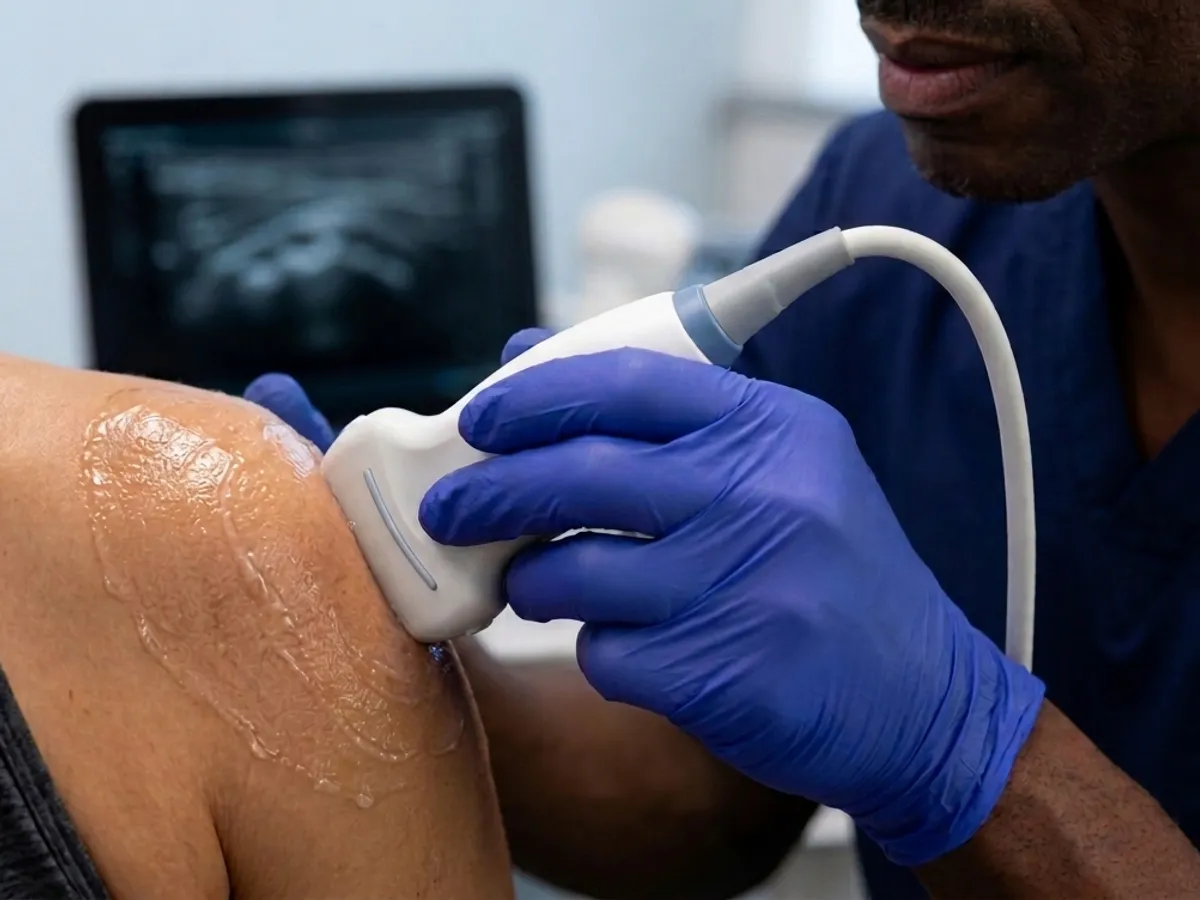
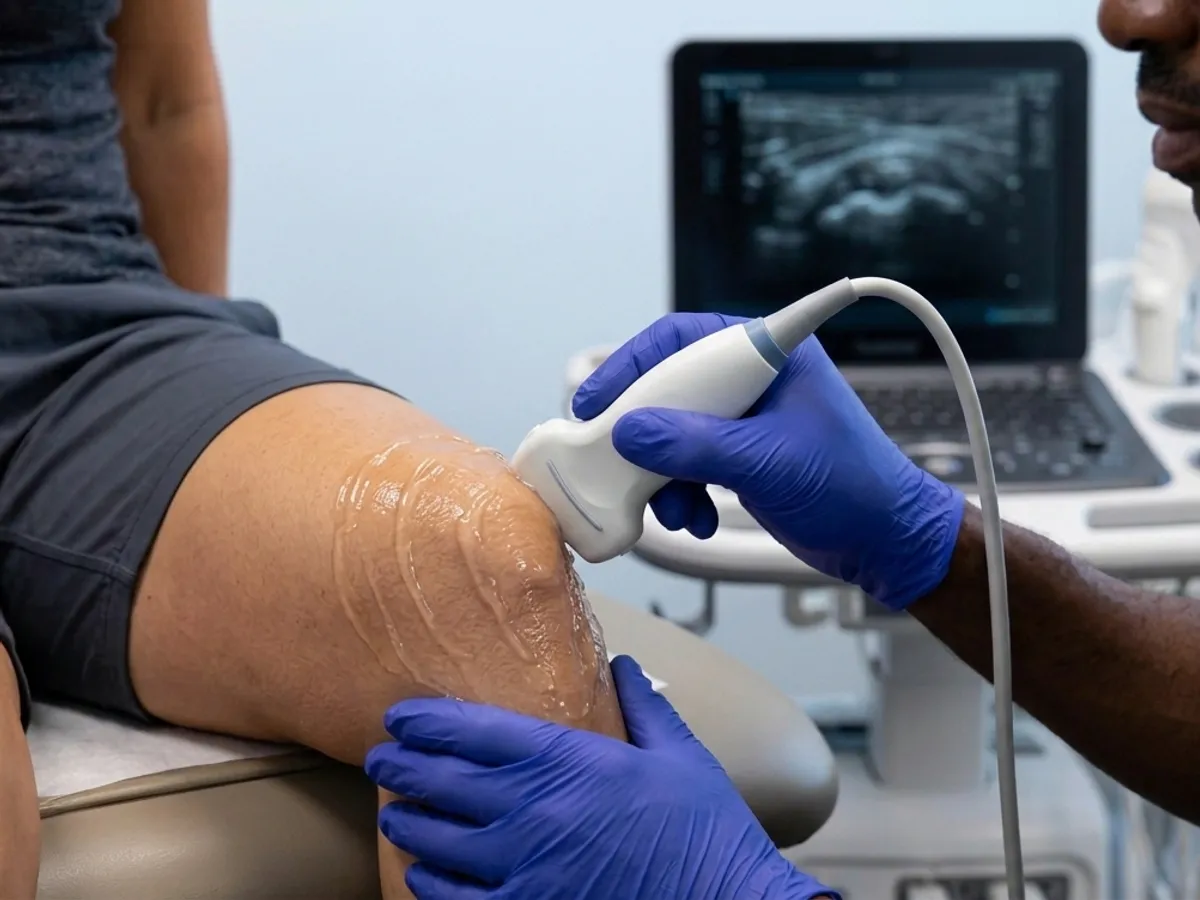
Unlike traditional imaging, which is often performed separately from a clinical examination, musculoskeletal ultrasound can be performed during your visit. This allows your provider to assess selected muscles, tendons, ligaments, joints, nerves, and other soft tissues in real time.

The goal is simple
Identify the Problem. Choose the Right Path Forward.
Assessment findings help determine the most appropriate plan of care, which may include MSK Therapeutics, MSK Corrective Exercise, additional imaging, referral to another healthcare provider, activity modification, or no intervention when treatment is not indicated.
How it works
What to expect with MSK Ultrasound Assessment
- Step 1
Clinical history
Your provider will review your current symptoms, injury history, aggravating activities, previous treatment, relevant medical history, activity level, and recovery goals.
- Step 2
Physical examination
A comprehensive assessment may include movement analysis, strength testing, orthopedic examination, functional assessment, balance and stability evaluation, and region-specific testing.
- Step 3
Real-time ultrasound assessment
When clinically indicated, diagnostic ultrasound imaging is used to evaluate the involved tissues. The examination may include imaging at rest, during movement, during muscle activation, and during functional tasks, when appropriate. This allows the provider to assess both structure and function.
- Step 4
Review of findings
Your provider will explain the relevant findings in clear, easy-to-understand language and discuss how they relate to your symptoms and physical examination.
- Step 5
Personalized recommendations
Based on the complete evaluation, recommendations may include exercise rehabilitation, activity and load management, MSK Therapeutics, follow-up evaluation, additional imaging, medical referral, or observation when treatment is not necessary. Treatment may begin during the same visit when clinically appropriate and scheduling permits. In other cases, a separate treatment appointment may be recommended.
The basics
About MSK Ultrasound Assessment
An MSK Ultrasound Assessment uses real-time diagnostic ultrasound imaging to evaluate selected muscles, tendons, ligaments, joints, and other musculoskeletal structures.
Ultrasound findings are interpreted together with your history, physical examination, orthopedic assessment, movement evaluation, and functional findings to provide additional information about your condition.
One advantage of ultrasound is the ability to evaluate selected tissues in real time and, when appropriate, during movement.
MSK Ultrasound Assessment is an evaluation service, not a treatment. The goal is to help determine the most appropriate next step, which may include MSK Therapeutics, MSK Corrective Exercise, additional imaging, referral, activity modification, or continued observation.
New Patient Special
$127
- Chiropractic Consultation
- Comprehensive Exam
- First Adjustment
- Shockwave Therapy
This is a $330+ value.
Why you may benefit from an MSK Ultrasound Assessment
For many patients, the MSK Ultrasound Assessment serves as the starting point of our Specialized MSK Care Model™.
Patients often seek an assessment when pain, injury, or movement limitations persist and additional information is needed to guide the next step in care.
Common reasons include:
- Tendon, muscle, or joint pain
- Sports-related and overuse injuries
- Recurrent or unresolved symptoms
- Pain during activity or exercise
- Joint swelling
- Return-to-sport evaluation
- Symptoms that have not improved as expected
- Uncertainty regarding the most appropriate treatment approach
The assessment helps determine whether the next step may include MSK Therapeutics, MSK Corrective Exercise, additional imaging, referral, activity modification, or continued observation.
How MSK ultrasound supports clinical decision-making
Musculoskeletal ultrasound may help your provider:
- Assess a specific painful or injured region
- Evaluate selected tissues in real time
- Compare the involved side to the unaffected side
- Identify findings that may contribute to pain, weakness, stiffness, or movement limitations
- Observe tissue movement during functional activities, when appropriate
- Support individualized treatment recommendations
- Determine whether ultrasound-guided procedures may be appropriate
- Monitor selected findings during follow-up care
- Evaluate tissue healing and recovery during rehabilitation

Ultrasound findings are always interpreted alongside your clinical history and physical examination.
Ultrasound images do not establish a diagnosis in isolation. Clinical decisions are based on the complete evaluation.
Why athletes and active individuals seek an MSK Ultrasound Assessment
Athletes and active individuals often seek an MSK Ultrasound Assessment when pain, injury, or movement limitations interfere with training, exercise, or sport participation.
Ultrasound allows selected muscles, tendons, ligaments, and joints to be evaluated in real time and, when appropriate, during movement.
Common reasons for assessment include:
- Return-to-sport evaluation
- Recurrent or unresolved injuries
- Tendon-related pain
- Muscle strains
- Running-related injuries
- Shoulder pain or injury
- Knee pain
- Achilles tendon pain
- Movement or performance limitations
- Training and injury-risk considerations
The assessment provides additional clinical information that may help guide treatment recommendations, rehabilitation planning, activity modification, and return-to-sport decisions.

MSK Ultrasound Assessment vs. MSK Therapeutics
These are separate services.
MSK Ultrasound Assessment
Uses real-time ultrasound imaging to evaluate selected musculoskeletal tissues and help determine the most appropriate next step in care.
MSK Therapeutics
A treatment service that may incorporate:
- Ultrasound-guided dry needling
- Electro-dry needling
- Shockwave therapy
- Red light therapy
- Exercise rehabilitation
- Corrective exercise and movement-based interventions
- Additional targeted treatments when appropriate
An MSK Ultrasound Assessment may help determine whether MSK Therapeutics is appropriate. Not every finding requires treatment, and recommendations are based on the complete evaluation.
Learn More About MSK Therapeutics →
Is MSK ultrasound right for every condition?
No. MSK ultrasound is one evaluation tool, but it is not the right tool for every problem.
It is most commonly used to assess selected muscles, tendons, ligaments, joints, and other soft tissues in real time.
Some conditions are better evaluated with X-rays, MRI, specialty consultation, or other medical testing.
If another evaluation or imaging study would be more appropriate, your provider will explain the recommended next step.
Who may benefit from an MSK Ultrasound Assessment?
An MSK Ultrasound Assessment may be appropriate for individuals who:
- Remain active through exercise, recreation, or sport
- Have persistent tendon, muscle, or soft-tissue pain
- Are recovering from a sports-related injury
- Experience recurring pain with activity
- Have not improved as expected with conservative care
- Are considering MSK Therapeutics
- Want additional information regarding an injury or condition
Not every condition is appropriate for ultrasound assessment. Recommendations are based on the clinical problem being evaluated and whether ultrasound is likely to provide useful information.
About Dr. Lowell Faison
Dr. Lowell Faison combines expertise in sports medicine, musculoskeletal ultrasound, rehabilitation, corrective exercise, and movement-based care to provide comprehensive evaluation and treatment of orthopedic and musculoskeletal conditions. As a National Academy of Sports Medicine (NASM) Corrective Exercise Specialist since 2007, with advanced training in Functional Movement Systems (FMS) and Selective Functional Movement Assessment (SFMA), he specializes in identifying factors that contribute to pain, movement limitations, recurring injuries, and performance deficits. By combining diagnostic evaluation, movement assessment, rehabilitation, and individualized treatment planning, Dr. Faison helps patients reduce pain, restore function, improve movement quality, and return to work, exercise, sport, and the activities they enjoy.
Schedule your MSK Ultrasound Assessment
Gain greater clarity about your pain, injury, movement limitations, or performance concerns through a comprehensive clinical evaluation that may include real-time musculoskeletal ultrasound assessment.
Start with answers. Build a smarter treatment plan. Get back to what matters.
Schedule Your MSK Ultrasound Assessment →
MSK Ultrasound Assessment identifies the problem. MSK Therapeutics helps address it.
What it helps
Conditions we commonly evaluate
Is an MSK Ultrasound Assessment the same as an MRI?+
No. Musculoskeletal Ultrasound and MRI are different imaging tools, and each has unique advantages. MSK Ultrasound provides real-time imaging, allowing your provider to evaluate muscles, tendons, ligaments, nerves, and joints during movement. This can be especially helpful when assessing how tissues function during specific activities or movements. MRI provides a more comprehensive view of an entire anatomical region and may be useful when additional diagnostic information is needed. Ultrasound and MRI are not competing tests. They are complementary tools that provide different types of information. When appropriate, your provider may recommend MRI as part of your evaluation and treatment plan.
What is musculoskeletal ultrasound imaging used for?+
Point-of-care ultrasound (POCUS) may be used to evaluate selected musculoskeletal tissues in real time during your visit. It may help identify soft-tissue injuries and abnormalities; evaluate muscles, tendons, ligaments, and joints; assess tissues during movement; evaluate muscle activation and function; monitor healing and recovery; support treatment planning; and help determine the next appropriate step within the Specialized MSK Care Model™. Ultrasound imaging is a valuable tool within the MSK Ultrasound Assessment and helps support the first step of our process: Identify the Problem → Address the Tissue → Restore the Movement.
How can MSK ultrasound support my treatment plan?+
MSK ultrasound provides real-time information about selected muscles, tendons, ligaments, joints, and other soft tissues, helping your provider identify findings that may be contributing to pain, dysfunction, or movement limitations. This information may help determine whether your care should focus on addressing the involved tissue through MSK Therapeutics, restoring movement through MSK Corrective Exercise, a combination of both services, or additional diagnostic evaluation when needed. MSK ultrasound is one tool used within the MSK Ultrasound Assessment to help identify the problem and guide the most appropriate path forward within our Specialized MSK Care Model™: Identify the Problem → Address the Tissue → Restore the Movement.
Will the assessment diagnose my condition?+
Not by itself. Ultrasound findings are only one part of the evaluation. The MSK Ultrasound Assessment may identify findings associated with your symptoms and help evaluate both tissue health and movement function. Unlike many imaging studies that evaluate tissues only at rest, ultrasound may also be used to assess selected muscles and soft tissues during movement when clinically appropriate. Ultrasound findings are not interpreted independently or used as the sole basis for a diagnosis. Findings are considered alongside your history, symptoms, physical examination, orthopedic assessment, and movement evaluation. The goal is not simply to identify what appears on an image, but to understand how those findings relate to your pain, movement limitations, and functional concerns so the most appropriate next step can be determined.
Will I receive treatment during my assessment?+
Not necessarily. The primary goal of the MSK Ultrasound Assessment is to identify the problem by evaluating the involved tissues, reviewing movement-related factors, and determining the most appropriate next step in your care. Depending on the findings, recommendations may include MSK Therapeutics, MSK Corrective Exercise, a combination of both services, or additional evaluation when appropriate. When clinically appropriate and scheduling permits, treatment may begin during the same visit. However, the assessment is first focused on understanding the problem before determining the most effective treatment approach: Identify the Problem → Address the Tissue → Restore the Movement.
Can an MSK Ultrasound Assessment lead to MSK Therapeutics?+
Yes. However, not every problem requires treatment. The goal of the assessment is to determine the most appropriate next step in your care. The MSK Ultrasound Assessment helps identify whether a tissue injury, dysfunction, or healing limitation may benefit from MSK Therapeutics. If treatment is appropriate, your provider will discuss the available options and develop an individualized care plan based on your findings, symptoms, and goals.
Can an MSK Ultrasound Assessment lead to MSK Corrective Exercise?+
Yes. However, not every problem requires corrective exercise or tissue-focused treatment. The goal of the assessment is to determine the most appropriate next step in your care. The MSK Ultrasound Assessment may help identify whether your symptoms are influenced by movement-related factors, including mobility restrictions, altered movement patterns, compensation strategies, or reduced neuromuscular control. If movement restoration is appropriate, your provider may recommend MSK Corrective Exercise to help restore efficient movement and improve long-term function. If recommended, an individualized plan will be developed based on your findings, symptoms, movement assessment, and goals. The goal is not simply to reduce pain; it is to restore efficient movement.
Do I need a referral?+
No. A referral is not required to schedule an MSK Ultrasound Assessment. Patients may schedule directly to begin the first step of our Specialized MSK Care Model™: Identify the Problem → Address the Tissue → Restore the Movement. If additional imaging, medical consultation, or referral is needed, your provider will discuss the most appropriate next steps based on your findings and goals.
Can you assess any body region?+
Many musculoskeletal conditions involving the neck, back, shoulder, elbow, wrist, hip, pelvis, knee, ankle, and surrounding soft tissues can be evaluated as part of an MSK Ultrasound Assessment. However, not every condition or body region is best evaluated with ultrasound. The provider will determine whether MSK ultrasound is appropriate based on your symptoms, the region involved, and the clinical question being evaluated. If additional information is needed, recommendations may include MRI, radiology services, specialist referral, or another form of medical evaluation to help identify the problem and determine the most appropriate next step in your care.
Explore more
Related services
Patient reviews
What our Durham patients say
“Complete Satisfaction and Professionalism. Top top Notch!”
“I saw Dr. David Nichols today and was extremely pleased with the adjustment and care. Dr. Nichols took time to explain the different ways he used therapy. This was an excellent adjustment and I highly recommend him and the entire practice. His schedule allows for…”
“So I'll be the first to say, as someone who practices acupuncture and is very holistic minded, I 100% was skeptical when I saw the words chiropractic and dry needling but I went there for the Shockwave and have not been disappointed. Not only am…”