
Wellness · September 25, 2026
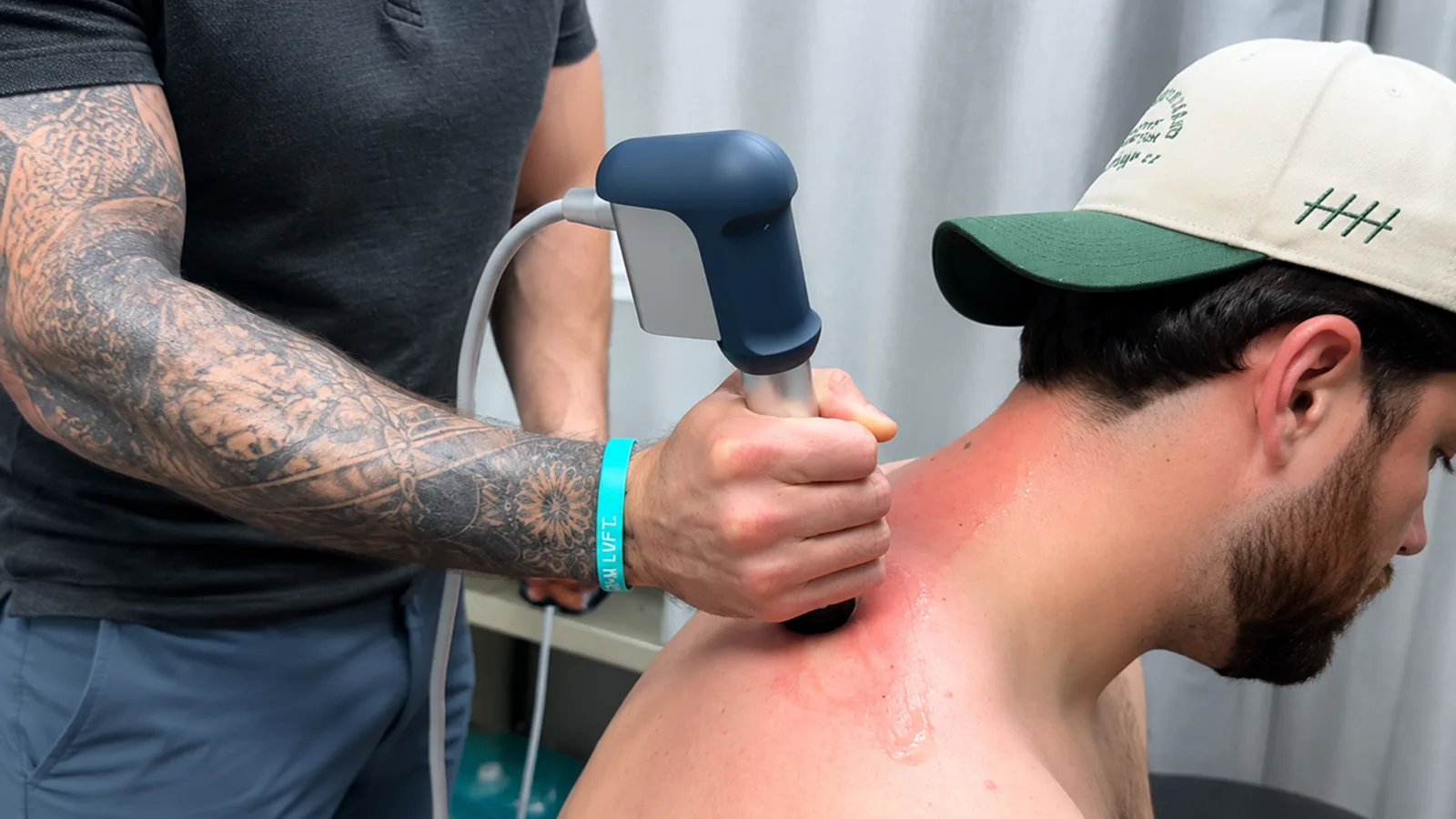
If you've been dealing with stubborn pain that just doesn't seem to respond to the usual approaches, there's a good chance someone has mentioned shockwave therapy to you. Maybe your chiropractor brought it up, or you came across it while searching for solutions online. Either way, you're probably wondering the same thing most people wonder before their first session: what does shockwave therapy actually feel like? That's a completely fair question, and it deserves a clear, honest answer. At Complete Chiropractic Sports And Wellness in Durham, NC, Dr. Kevin Mclaughlin helps patients understand exactly what to expect before, during, and after shockwave therapy so there are no surprises and no unnecessary anxiety.
What Is Shockwave Therapy?
Shockwave therapy (also called extracorporeal shockwave therapy, or ESWT) is a non-invasive treatment that uses acoustic sound waves to stimulate healing in damaged or chronically painful soft tissue. It's commonly used for tendon issues, plantar fasciitis, and other musculoskeletal conditions that haven't responded well to other conservative care. The procedure is delivered through a handheld device placed directly on the skin over the affected area.
What Is Shockwave Therapy and How Does It Work?
Shockwave therapy might sound intimidating when you hear the word "shockwave," but it has nothing to do with electrical shocks. The term refers to high-energy acoustic waves — essentially sound energy — delivered in rapid pulses to a targeted area of the body. These pulses penetrate the skin and reach the deeper tissues underneath, including tendons, ligaments, and muscle attachments.
The mechanism behind shockwave therapy is what makes it so interesting from a clinical standpoint. When tissue becomes chronically injured or degenerative, the body sometimes struggles to restart its own healing process. The acoustic waves essentially "wake up" that tissue. Research suggests that shockwave therapy promotes increased blood flow, breaks down calcification in tendons, and stimulates the production of collagen, the building block of healthy connective tissue. Evidence from sources including the National Center for Complementary and Integrative Health indicates that shockwave therapy is a promising non-surgical option for certain musculoskeletal conditions.
There are two main types used in clinical settings: radial shockwave therapy, which disperses energy in a wider area and is most common in chiropractic and sports medicine clinics, and focused shockwave therapy, which delivers energy to a very precise, deeper point. Dr. Kevin Mclaughlin at Complete Chiropractic Sports And Wellness determines which approach is appropriate based on each patient's condition and goals.
What Does Shockwave Therapy Feel Like During Treatment?
This is the question we hear most often at our Durham, NC clinic, and it's the most important one to answer honestly. The experience of shockwave therapy varies from person to person, but there are some sensations that are very commonly reported.
Most patients describe the sensation during treatment as a series of rapid, firm tapping or pulsing feelings against the skin. It's a bit like a deep, rhythmic pressure being applied in quick bursts. Depending on the intensity setting and the area being treated, some patients describe it as mildly uncomfortable, while others feel more of a noticeable ache or pressure, particularly when the device is positioned directly over a tender or inflamed spot.
It's worth being upfront: shockwave therapy is not painless for everyone. Areas that are already inflamed or highly sensitive can feel more intense during treatment. That said, the discomfort is almost always tolerable, and Dr. Kevin Mclaughlin adjusts the intensity based on your feedback throughout the session. You are never expected to "just push through" pain silently — communication is part of the process.
Sessions are also relatively short. Most treatments last between 5 and 20 minutes depending on the area being addressed. Many patients are surprised by how quickly it's over. Some people even report feeling a kind of numbing effect during the session as the therapy progresses, which can make the later part of treatment more comfortable than the beginning.
Intensity Levels and Personalization
One of the reasons shockwave therapy is so well-suited to chiropractic care is its flexibility. Practitioners like Dr. Kevin Mclaughlin can adjust the frequency, pressure, and number of pulses delivered based on what your body can tolerate and what your tissue needs. This means first-time patients don't have to worry about being overwhelmed. The settings are typically started on the lower end and gradually increased as comfort allows.
By the time a patient completes their first session at Complete Chiropractic Sports And Wellness, most feel informed, comfortable with the process, and ready to continue with follow-up visits if recommended.
What to Expect After a Shockwave Therapy Session
Understanding the post-treatment experience is just as important as knowing what happens during the session. Here's the honest picture of what most patients experience after shockwave therapy.
In the first 24 to 48 hours following treatment, it's common to feel some soreness or tenderness in the treated area. Think of it like the feeling after a deep tissue massage: your body is responding to stimulation, and some mild discomfort is part of the process. The area may also feel slightly warm or look a bit red temporarily. These are normal responses and typically resolve within a day or two.
What many patients find encouraging is that shockwave therapy often produces gradual improvement over multiple sessions rather than immediate dramatic relief. Evidence indicates that a course of 3 to 6 sessions, typically spaced one week apart, is often recommended for best results. Some patients notice meaningful improvement after just a few sessions; others require the full course. Progress tends to be cumulative, so patience is important.
It's generally advised to avoid high-intensity activity involving the treated area in the first 48 hours after a session. Light movement and gentle activity are usually fine. Dr. Kevin Mclaughlin will give you specific guidance based on what was treated and your overall care plan.
Common Conditions Treated with Shockwave Therapy
Shockwave therapy has a strong track record in treating a number of stubborn musculoskeletal conditions. Here in Durham, NC, many patients come to Complete Chiropractic Sports And Wellness specifically because they've struggled with pain that hasn't responded to other approaches.
Plantar fasciitis is one of the most well-known applications for shockwave therapy. That deep, stabbing heel pain that makes your first steps in the morning feel unbearable is a hallmark of this condition, and shockwave therapy has been shown to help promote healing in the fascia tissue of the foot. Similarly, Achilles tendinopathy — chronic pain and stiffness along the tendon at the back of the ankle — responds well to shockwave treatment according to available evidence.
All tendinopathies including rotator cuff tendinopathy, tennis elbow (lateral epicondylitis), golfer's elbow (medial epicondylitis), and calcific shoulder, hip, and knee conditions are also commonly treated with shockwave therapy. Patients dealing with chronic muscle trigger points and certain types of knee pain have also found benefit through this approach. It tends to be most effective for conditions that are chronic or have not healed adequately on their own.
How Shockwave Therapy Fits Into Chiropractic Care
At Complete Chiropractic Sports And Wellness, shockwave therapy is never used in isolation. Dr. Kevin Mclaughlin views it as a powerful adjunct to a comprehensive, individualized care plan, not a standalone cure. This is an important distinction. Chiropractic care is fundamentally about understanding the whole person: your movement patterns, structural alignment, muscle function, and lifestyle habits all play a role in why you're in pain and what it will take to recover.
Shockwave therapy works particularly well alongside chiropractic adjustments because it addresses soft tissue dysfunction — tendons, ligaments, and fascia — while chiropractic care addresses joint mobility, spinal alignment, and nervous system function. When both are addressed together, patients often find that their progress is more complete and lasting.
In a sports and wellness context, which is the specialty of our Durham, NC practice, shockwave therapy is also valuable for athletes dealing with overuse injuries. Whether you're a runner dealing with tendon issues, a weekend warrior with shoulder pain, or someone managing a work-related repetitive strain, integrating shockwave therapy into your chiropractic care plan may help you return to activity faster and with better outcomes.
Practical Tips to Prepare for Your Session
Preparing for shockwave therapy doesn't require much, but a few simple steps can make your experience more comfortable and productive.
Wear comfortable, loose-fitting clothing that allows easy access to the area being treated. If you're having your shoulder, hip, or back addressed, for instance, wearing a tank top or athletic shorts means less time readjusting in the treatment room. Stay well-hydrated before your appointment, as good tissue hydration supports the body's response to treatment.
Avoid applying any creams, lotions, or heating pads to the area being treated on the day of your session. Arrive a few minutes early if it's your first visit so there's time to discuss your goals and concerns with Dr. Kevin Mclaughlin before the session begins. And most importantly, plan to communicate openly during treatment. Letting the care team know how you're feeling in real time helps ensure the session is calibrated correctly for you.
After your session, give your body the recovery time it needs. Gentle walking and normal daily activity are typically fine, but avoid intense training or heavy loading of the treated area for at least 48 hours.
When to See a Chiropractor About Shockwave Therapy
If you've been dealing with pain in a tendon, heel, shoulder, elbow, or other soft tissue area for more than 6 to 8 weeks without significant improvement, shockwave therapy may be worth exploring. Chronic injuries that haven't healed with rest, ice, or basic stretching are often the best candidates for this type of treatment.
It's also worth considering a chiropractic evaluation if you've previously tried other conservative approaches like physical therapy, massage, and anti-inflammatory medications without lasting relief. Shockwave therapy gives the body a different kind of stimulus that can sometimes break through a healing plateau.
There are some situations where shockwave therapy is not appropriate. It is generally not used over areas of active infection, open wounds, bone tumors, or blood clotting disorders. Pregnant women should avoid it, and there are precautions around use near growth plates in younger patients. Dr. Kevin Mclaughlin will conduct a thorough evaluation before any treatment to ensure it's the right fit for your specific situation. If there's ever a concern that requires a different level of medical attention, appropriate referrals are always made.
Condition | Typical Symptom | Shockwave Therapy Role | Expected Sessions |
|---|---|---|---|
Plantar Fasciitis | Stabbing heel pain, worst in the morning | Promotes fascial tissue healing and reduces calcification | 3–6 sessions |
Achilles Tendinopathy | Stiffness and pain along the back of the ankle | Stimulates collagen production in degenerative tendon | 3–5 sessions |
Tennis Elbow (Lateral Epicondylitis) | Outer elbow pain with gripping or lifting | Breaks down scar tissue, improves circulation | 3–6 sessions |
Rotator Cuff Tendinopathy | Shoulder aching, weakness with overhead motion | Encourages healing in degenerated cuff tissue | 4–6 sessions |
Calcific Shoulder | Sudden, severe shoulder pain with calcium deposits | Helps break down calcification in the tendon | 6-12 sessions |
Myths vs. Facts About Shockwave Therapy
Myth: Shockwave therapy uses electrical shocks and is dangerous.
Fact: The word "shockwave" refers to acoustic sound waves, not electrical current. The therapy is completely non-invasive and does not involve electricity being passed through the body. It is a widely accepted, safe modality when administered by a trained practitioner like Dr. Kevin Mclaughlin.
Myth: Shockwave therapy should be completely painless or something is wrong.
Fact: It's normal to feel some discomfort during shockwave therapy, especially over already-painful areas. This is expected and manageable. The intensity is always adjusted based on patient comfort, and any significant pain should be communicated immediately to the provider.
Myth: You'll feel better immediately after your first session.
Fact: Shockwave therapy works through a biological healing process that takes time. Most patients begin to notice meaningful improvement after 2 to 4 sessions. Often, patients report relief immediately following the treatment. Results are cumulative, and expecting instant overnight relief can lead to unnecessary discouragement.
Myth: Shockwave therapy is only for professional athletes.
Fact: While shockwave therapy is popular in sports medicine, it is absolutely appropriate for everyday patients dealing with chronic tendon or soft tissue pain — regardless of athletic background. At Complete Chiropractic Sports And Wellness in Durham, NC, patients from all walks of life benefit from this treatment.
Myth: If shockwave therapy doesn't work, nothing will.
Fact: Shockwave therapy is one tool in a broader toolkit. If it doesn't produce the desired results, there are other conservative approaches to explore. A comprehensive care plan may include chiropractic adjustments, rehabilitative exercises, soft tissue therapies, and lifestyle modifications alongside or instead of shockwave therapy.
Final Thoughts from Complete Chiropractic Sports And Wellness
Dealing with chronic pain — especially the kind that limits your daily activities, your workouts, or just your ability to get through the day comfortably — is exhausting. We understand that here in Durham, NC, and it's exactly why Dr. Kevin Mclaughlin and the team at Complete Chiropractic Sports And Wellness are committed to offering evidence-informed, individualized care options like shockwave therapy.
If you've been wondering whether shockwave therapy might be right for you, the best first step is a thorough evaluation. Understanding your specific condition, how long it's been present, what you've already tried, and what your goals are — all of that shapes what treatment makes the most sense. You deserve a care plan built around your needs, not a one-size-fits-all approach.
We're proud to serve the Durham, NC community and help our patients move better, feel better, and get back to doing the things they love. If shockwave therapy is something you're curious about, we'd love to have a conversation and help you figure out if it's the right fit for where you are right now.
Frequently Asked Questions
How many shockwave therapy sessions will I need?
The number of sessions varies depending on the condition being treated and how your body responds. Most patients receive between 3 and 6 sessions, typically spaced about one week apart. Dr. Kevin Mclaughlin will outline a recommended course of treatment after your initial evaluation.
Is shockwave therapy covered by insurance?
Coverage for shockwave therapy varies widely by insurance plan and is not universally covered. It's best to contact your insurance provider directly to ask about your specific benefits. The team at Complete Chiropractic Sports And Wellness can help provide documentation of your care as needed.
Can shockwave therapy make my pain worse?
It's common to experience temporary soreness in the treated area for 24 to 48 hours after a session. This is a normal part of the healing response and is generally mild. If you experience significant or worsening pain beyond this window, contact your provider right away.
How long before I notice results from shockwave therapy?
Many patients begin noticing improvement after 2 to 4 sessions, though results are individual. Some people experience earlier relief while others see the most benefit after completing a full course of treatment. Progress continues in the weeks following the final session as the tissue continues to heal.
Is shockwave therapy safe for everyone?
Shockwave therapy is safe for most adults when administered correctly, but it's not appropriate for everyone. Contraindications include active infection, certain blood disorders, pregnancy, and use over bone tumors or growth plates. Dr. Kevin Mclaughlin will screen for these factors before recommending treatment.
Can I combine shockwave therapy with chiropractic adjustments?
Yes — in fact, combining these therapies is often more effective than either approach alone. Chiropractic adjustments address joint mobility and structural alignment, while shockwave therapy targets soft tissue repair. Together, they provide a more comprehensive path to recovery.
— Key Takeaways
Shockwave therapy uses acoustic sound waves, not electricity, to stimulate healing in damaged or chronically painful soft tissue.
During treatment, most patients feel a firm, rapid tapping or pulsing sensation; some mild discomfort is normal, especially over sensitive areas, but intensity is always adjusted to your comfort level.
Post-session soreness lasting 24–48 hours is common and expected; results build gradually over 3 to 6 sessions.
It's most effective for chronic conditions like plantar fasciitis, tendinopathy, tennis elbow, and rotator cuff issues that haven't responded to other conservative care.
At Complete Chiropractic Sports And Wellness in Durham, NC, Dr. Kevin Mclaughlin integrates shockwave therapy into a personalized care plan for the best possible outcomes.